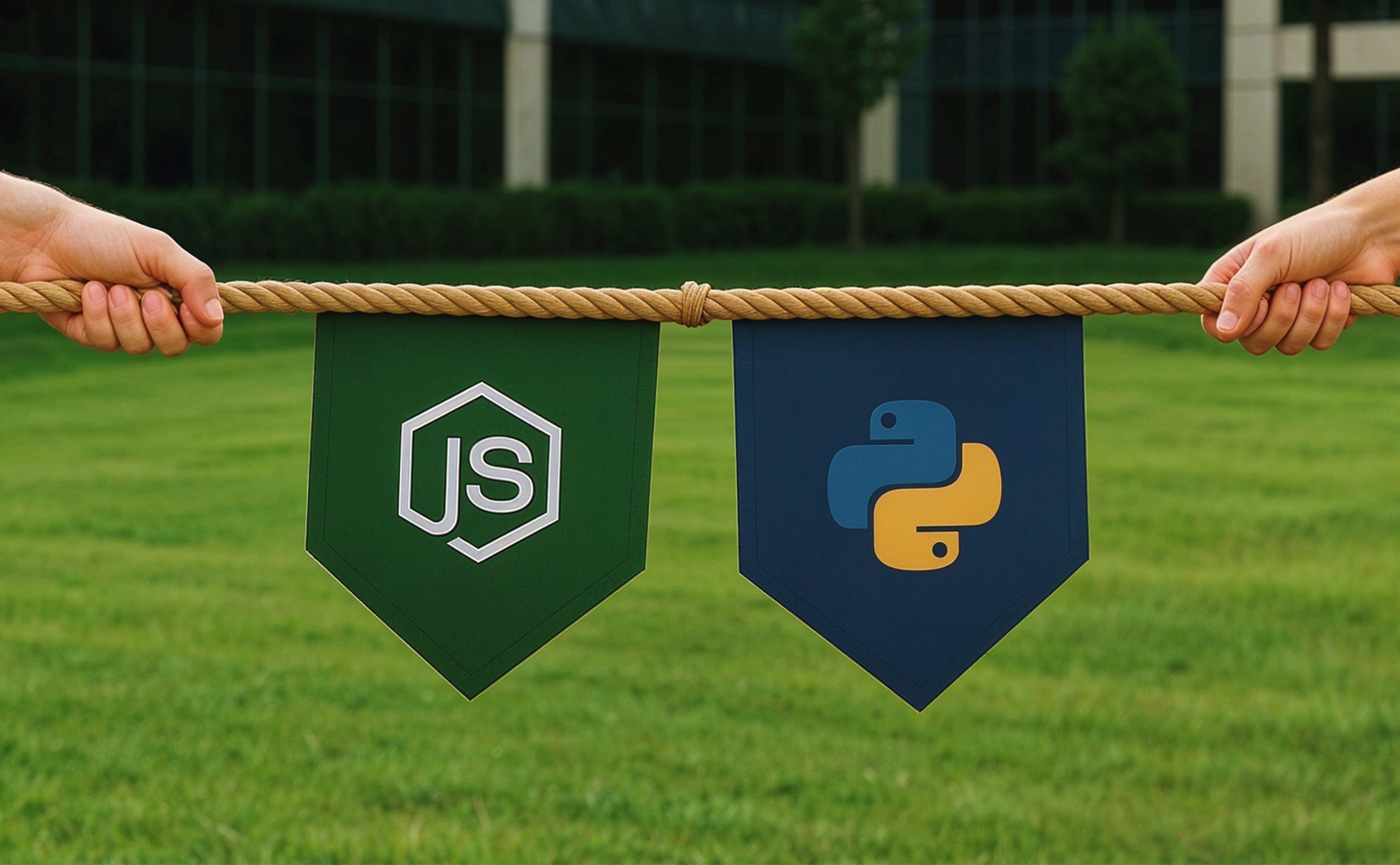
Top 5 Tech Stacks: Choosing the Right One
Listen to this article
Every app we use is powered by a carefully chosen technology stack, which is a combination of frameworks, programming languages, databases, infrastructure, and tools that work together to deliver seamless digital experiences. For businesses, the tech stack is not just a technical choice; it's a strategic investment that directly impacts project time-to-market, scalability, security, and long-term performance and stability.
Choosing the right technology stack is critical in software development. The wrong stack can cause severe performance limitations, scaling challenges, security breaches, and costly system rewrites. The right choice accelerates innovation, future-ready scalability, and sustainable growth.
This blog closely looks at the top 5 best Tech stacks, providing a detailed overview of each, along with factors to consider while choosing the best stack for your project.
In a Nutshell
Choosing the right tech stack is a critical decision in building secure, scalable, and high-performance applications. The right tech stack depends on project objectives, development speed, scalability requirements, ecosystem maturity, long-term maintenance, and business goals. Popular choices include the LEMP, ASP.NET, and JavaScript-based stacks such as MEAN, MERN, and MEVN. Additionally, Python frameworks like Django and Flask, along with Java technologies such as Spring Framework and Spring Boot, remain widely adopted. Evaluating frontend frameworks, backend languages, databases, and cloud infrastructure ensures optimal performance, faster deployment, and future growth while aligning technology decisions with business objectives and user expectations.
What is a Technology Stack?
A tech stack refers to a collection of frameworks, programming languages, databases, servers, and development tools, stacked together to build and run applications. Also known as technology infrastructure or solutions stack, they act as the architectural blueprint and toolkit for software development, where different layers work together to deliver user experiences and business functionality.
Each layer of the technology stack plays a vital role in building, deploying, and maintaining the digital systems. The frontend layer manages everything that users directly interact within a device interface or browser. Built using technologies like CSS, HTML, and frameworks like JavaScript, it handles responsiveness, layout, and user experience. The backend layer, on the other hand, handles server-side logic, data processing, authentication, and business objectives. Powered by runtime environments like Node.js and databases such as MySQL, it manages APIs, security, transactions, and integrations. The frontend communicates with the backend via APIs, ensuring dynamic content rendering and seamless customer engagement across devices.
‣ Platforms & Operating Systems
This layer forms the foundational execution environment of a tech stack, which ensures performance, security, optimization, and reliability across environments. Platforms like the cloud enable application hosting and scalability. An operating system like Linux, macOS, or Windows manages hardware resources, processes, memory, and networking.
‣ Programming Languages
Refers to the formal language that developers use to write application logic and system behaviour. Choosing the right language is vital as it impacts developer productivity, integration capabilities, maintenance, scalability, and long-term technical strategy. Popular languages include JavaScript, Python, Java, etc.
‣ Frameworks
Frameworks like Angular, Django, and Spring Boot are predefined structures and components in software development. They offer pre-designed functionality, libraries, and enforce coding patterns, manage routing, handle business logic, and integrate security features.
‣ Databases
These refer to structured collections of data that are organized, stored, and managed for efficient information retrieval, updation, and querying. MongoDB, PostgreSQL, and MySQL are some popular databases.
‣ Libraries
These are reusable and pre-written code collections that perform specific tasks and help developers streamline and simplify the development process. Libraries help in enhancing productivity, data handling, visualization, and networking by encapsulating complex operations or offering ready-to-use components.
‣ Development Tools
Tools like Docker and Git support coding, testing, debugging, version control, and deployment. They ensure code quality, reproducibility, and efficient lifecycle management right from development to production. Hence, in short, the tech stack defines how an app is architected, developed, deployed, and maintained, with layers working in alignment. Now that you have an idea regarding what a tech stack is and why choosing the right tech stack is essential for your development environments, let's have a close look at the top 5 tech stacks in 2026.
Top 5 Tech Stacks
Let’s have a look at the top 5 tech stacks that stand out for their performance, scalability, and overall effectiveness.
1. LEMP Stack
LEMP is an open-source web development stack that powers many dynamic websites and CMS platforms, including WordPress and Drupal, due to its high performance and cost efficiency. It is also widely used to run powerful application frameworks like Laravel and e-commerce platforms such as Magento.
LEMP is an acronym where L stands for Linux Operating System, E stands for Nginx (pronounced “engine-x”), M for MySQL database and P for the PHP scripting language. According to the current web technology usage data, LEMP leads the tech stack market share by 40.6 %, surpassing Microsoft stacks and MERN/MEAN by a wide margin. Its efficient architecture, scalability, and performance optimization make it suitable for both high-traffic apps and websites with complex backend requirements.
Key Technology Components:
- Linux: offers a secure and stable server environment.
- Nginx: the web server software handles HTTP requests efficiently with an event-driven architecture.
- MySQL: the relational database management system manages structured data using SQL queries.
- PHP: the programming language processes backend logic to generate dynamic content.
The stack is scalable and offers high-performance, owing to Nginx’s ability to handle thousands of concurrent connections with low resource consumption. It is also a perfect choice for budget-conscious projects, as all the core components are open-source and free to use. Overall, the stack is secure and highly customizable, making it suitable for SME’s, startups, and enterprise-level applications requiring a reliable web infrastructure.
2. ASP.NET Stack
ASP.NET is an open source server-side web application framework developed by Microsoft, running on the .NET platform. “ASP” stands for Active Server Pages, and “.NET” is the brand name for Microsoft’s developer platform. It is a trusted choice for web development worldwide, with 4.6 million live websites running on the web. Its modern implementation, ASP.NET Core, is open source, cross-platform, and cloud optimized, which is compiled to native code via JIT/AOT, integrates well with SQL Server/Azure, and supports modular middleware pipelines.
ASP.NET Core is built for large-scale app development and is capable of handling any size workload, making it a robust stack choice for enterprise-level apps. Its rich repository serves as a hub for source code, community discussions, issue resolutions, and contributions with over 37.7k stars and 10.6k forks. Besides the core functionalities, the ASP.NET ecosystem offers a range of rich extensions, robust security, regulatory compliance, seamless integration with modern frameworks, and reliable performance.
3. MERN, MEAN & MEVN
The MERN, MEAN, and MEVN stacks are JavaScript full-stack solutions that enable fast development, seamless data handling, integrations, and efficient full-stack workflows. These stacks are ideal for startups, MVPs, interactive SPAs, and real-world apps where rapid iteration, UX responsiveness, faster time-to-market, and reduced development friction are priorities. The StackOverflow 2025 survey portrays the continued popularity of Node.js, React, Angular, and Vue technologies in global app development, with Node.js and React continuing to dominate and show strong growth, as in previous years.
‣ MERN (MongoDB, Express.js, React, Node.js)
MERN enables end-to-end software development using JavaScript and JSON, ensuring flexibility, high performance, and seamless data exchange between client and server.
Key Technology Components:
- MongoDB: ensure storage of flexible, schema-less JSON documents aligned to frontend data structures.
- Express.js: the backend web framework, simplifies routing and middleware integration.
- React: its component-based architecture and virtual DOM improve rendering performance and enable dynamic single-page apps (SPAs).
- Node.js: the JavaScript runtime environment offers a non-blocking, asynchronous event-driven runtime for scalable APIs.
MERN is a preferred stack for SaaS platforms, real-time dashboards, and startup ecosystems where rapid development, UI responsiveness, scalability, and strong ecosystem support are crucial. A real-world application of the MERN stack is the popular app “Netflix”. It uses the stack for its frontend user interface to deliver high-performance streaming experiences.
‣ MEAN (MongoDB, Express.js, Angular, Node.js)
MEAN is a free, open-source tech stack known for its flexibility and versatility. Like other JavaScript-based stacks such as MERN and MEVN, it uses MongoDB, Express.js, and Node.js to handle the database, backend framework, and server runtime. The key distinction lies in its frontend layer, Angular, which provides a structured, TypeScript-driven framework for building scalable single-page applications.
This flexibility, offered by using JavaScript on both the client and server sides, makes it easier to write, test, deploy, scale, and maintain applications, reducing the need for developers to switch between different programming languages.
‣ MEVN (MongoDB, Express.js, Vue.js, Node.js)
MEVN stack uses Vue.js as the frontend technology and delivers a lightweight and progressive full-stack JavaScript solution. Vue.js is fast with a gentle learning curve, making MEVN ideal for small to midscale applications and MVP developments.
MEVN is a preferred choice for modern startups, SaaS products, MVP applications, particularly agile teams seeking dependable yet structured frontend architectures, where development speed, simplicity, and maintenance are key.
4. Python (Django/Flask)
The Python stack is centered around Python and its powerful web frameworks, Django and Flask. The combination makes the stack versatile for data processing, backend systems, and scalable web applications. According to the 2025 Stack Overflow Developer Survey, Python continues its strong adoption curve in the developer ecosystem, recording 57.9 % usage among developers, and it represents a 7 percentage-point increase from 2024, indicating accelerating momentum rather than stagnation. Flask was used by around 14.4 % of developers working with web technologies, while Django saw usage at approximately 12.6 % of respondents.
Key Technology Components:
- Python: An interpreted programming language known for its readability, extensive standard library, and a vast ecosystem of third-party packages that accelerate development.
- Django or Flask: Python web frameworks are typically used independently. Django offers a batteries-included architecture with built-in ORM, authentication, admin interface, and security features, while Flask provides a lightweight and modular framework ideal for APIs and microservices.
- PostgreSQL: A widely used relational database in Python ecosystems, known for reliability, advanced querying capabilities, and strong support for complex applications.
- Gunicorn/Uvicorn: Application servers used to run Python web applications in production environments, handling requests and managing communication between the application and web server.
- Nginx: Often used as a reverse proxy and load balancer, improving performance, scalability, and security for deployed Python applications.
The flexibility and simplicity of the Python stack make it an excellent choice for developing feature-rich applications, data-intensive systems, and modern web applications. It integrates easily with cloud infrastructure and distributed architectures.
5. Java (Spring Framework, Spring Boot)
The Java stack is a server-side application development stack that centers around Java and enterprise-grade frameworks like Spring Framework and Spring Boot.
The TIOBE Index 2026 ranks Java at the 4th position after Python and C with 8.12% rating, making it one of the most regularly used and discussed languages in the developer ecosystem.
This stack is widely adopted across large enterprises, financial ecosystems, and other high-throughput backends because of the stability, robustness, and long-term maintainability and strong ecosystem support. Also, it seamlessly integrates with relational databases, REST APIs, and containerization platforms.
Key Technology Components:
- Java: the core programming language, and the JVM (Java Virtual Machine), provide the runtime environment.
- Spring Framework: Spring is the core enterprise application framework for Java that offers security, dependency injection, infrastructure, abstraction layers, and integration capabilities with enterprise systems.
- Spring Boot: Built on top of the Spring framework, Spring Boot simplifies and accelerates setup, configuration, and production-ready microservices development.
Overall, the Java-Spring ecosystem remains a go-to choice for mission-critical, scalable applications requiring mature tooling and performance.
Ready to build with a stack that ensures scalability?
Reach out to usLoading...
Key Factors in Choosing the Right Tech Stack
1. Define project size, Complexity, and Functionality
A clear understanding of the project size, architectural complexity, and functionality is key in determining the foundational technology stack. The chosen tech stack must align with the core project requirements. For small, straightforward projects, lightweight tech stacks like Node.js + Express + MongoDB will be perfect, while enterprise-grade systems like fintech platforms may require a more comprehensive, robust stack such as Java + Spring Boot + PostgreSQL with microservices.
2. Scalability Requirements
The tech stack you choose must have the potential to scale sufficiently as your project progresses and grows. It should possess the flexibility to add new compelling features and handle increasing workloads. Hence, consider choosing stacks that prioritise maintainable code, have a strong community support, and consider future integrations and growth.
3. Technology and Team Expertise
Selecting a tech stack that your team is proficient in is crucial as it directly impacts productivity, code quality, and future maintainability. Choosing a familiar technology will significantly save lots of time and resources in training your team, and overall development costs.
4. Time to Market
The tech stack selected must speed up the development process without causing any quality issues and ensure the project closes within the prescribed time window. Look for stacks that offer solutions, utilities, are easy for developers to learn and test, have good community support, and help bring new functionalities faster.
5. Security Requirements
Security plays a crucial role in software development. Hence, picking a robust tech stack with a high security track record and supporting a high-end security framework is critical in meeting your app development goals. A tech stack with strong security capabilities will ensure maximum safety of data, transactions, and minimize disruptions and vulnerabilities.
Healthcare and finance, among others, are fields that require secure technology stacks. These stacks must incorporate encryption protocols such as TLS and AES, along with robust authentication methods like OAuth 2.0 and JWT. Furthermore, the underlying infrastructure needs to be prepared for regulatory compliance.
6. Maintenance
The software development process doesn't end with deployment, and maintenance at every stage is vital. The long-term maintainability depends on factors like documentation quality, active community support, regular updates, and backward compatibility. For instance, open-source ecosystems like Node.js and React offer large communities and consistent updates.
7. Development Cost, Hosting, and Open Source Factors
Choosing a tech stack that fits your budget and offers great value for money is important. Most tech stacks available as open source in the market may not offer the desired feature sets or functionalities, and selecting one with specifications can incur a large subscription fee. Hence, consider licensing, hosting, and maintenance costs when choosing a stack.
Open-source technologies like Linux, MySQL, and PHP reduce licensing costs, while Cloud hosting like AWS, Azure, and GCP offer flexible pricing models. Startups often choose the LEMP stack due to zero licensing fees and widespread hosting support.
Which stack will handle your app’s future growth?
Let's talkLoading...
Emerging Trends in Technology Stacks for 2026
Today, software development needs are evolving faster than we think, driven by emerging technologies and changing business objectives. Sectors are racing to adopt new trends to streamline workflows and give businesses a competitive edge. Let’s take a look at some of the key emerging trends in the technology stack for the year 2026.
1. AI and Machine Learning Integration
AI is no longer optional – it's the operating system of modern software development.
- Yury Zelianko, Product Owner at Techreviewer
AI and Machine Learning (ML) are fundamentally reshaping modern tech stacks, powering everything from automated decision-making to predictive analytics. Businesses are adopting ML-enabled recommendations, anomaly detection, and predictive workflows to enhance decision-making and customer engagement. Integrating AI and ML in software development can significantly optimize operations, build smarter apps, and personalize customer experiences.
2. Serverless Computing
According to the Mordor Intelligence Serverless Computing Analysis, the serverless market is estimated at USD 32.6 billion in 2026, growing at a CAGR of 22.94%, with projections reaching 91.56% billion in 2031.
Serverless computing enables businesses to build apps through a cost-effective, scalable, and flexible approach, where developers focus on logic and not on servers. These architectures help eliminate traditional server provisioning, allowing developers to deploy functions that auto-scale with demand. This trend is ideal for startups, variable traffic applications, APIs, and microservices centric systems, and significantly helps reduce operational gaps, speeds up development, and accelerates time-to-market.
3. Microservices Architecture
Microservices remain vital to modern systems, enabling modular, loosely coupled services that scale and evolve independently without any monolithic risks. The 2025 MACH Alliance Global Annual Research surveyed 561 companies and predicted that around 61% of the tech stack is going to be MACH (Microservices, API-first, Cloud Native, & Headless) by 2026.
Almost every successful engineering team relies on micro-architectures because they allow companies to replace or upgrade individual tools without breaking the entire product.
- Alex Levkin, Founder and CEO at AI paralegal platform iPNOTE
Microservices are recommended for complex platforms with modular service boundaries, enabling faster iteration, fault isolation, and hybrid cloud deployments. Enterprises benefit from improved uptime, lateral scalability, resilience, and integration with automated layers.
4. Cloud-Native Technologies
According to the State of Cloud Native Development Q3 2025 analysis, “77% of backend developers are using at least one technology strongly associated with cloud native approaches, and more than half (58%) of DevOps professionals can be classified as cloud native.”
Cloud native platforms like AWS, Google Cloud, and Azure have been trending due to their container orchestration, API first design, elasticity, and native scalability. Hybrid and multi-cloud patterns help businesses scale efficiently and stay resilient by optimizing workloads for compliance and performance. These stacks enable fast feature delivery, robust DevOps, and cost-effectiveness, especially across environments where rapid iteration, fault tolerance, and efficient resource utilization are imperative for business outcomes.
5. Blockchain and Decentralized Applications
Blockchain adoption has broadened from crypto to enterprise use cases like decentralized finance (DeFi), identity, and asset tokenization. Decentralized apps (dApps) and Web3 ecosystems are unlocking new ownership models, enhancing interoperability, data integrity, and auditability across sectors like logistics and finance. In 2026, Blockchain is ideal for systems requiring tokenized assets, transparent transactions, and decentralized governance frameworks.
6. AI-Powered Development Tools (AIOps/ Code Assistants)
“84% of respondents are using or planning to use AI tools in their development process, an increase over last year (76%).”
AI-powered development tools and AIOps platforms are embedding intelligence, improving software reliability and developer productivity. The popular AI code assistants like GitHub Copilot, Claude Code and ChatGPT Codex help generate, refactor, and optimize code in languages like Python, JavaScript, and C++, while AIOps platforms aid with automated monitoring and incident resolution in CI/CD and cloud stacks. Adoption of code assistants helps boost developer speed, generate boilerplate, detect security risks, reduce bugs, and suggest fixes in real time. In 2026, integration of AI tools within any stack can accelerate delivery, enhance quality, and streamline DevOps workflows.
Conclusion
Choosing the right technology stack is not about chasing trends, it’s about aligning technology decisions with business objectives, product vision, scalability requirements, and the capabilities of your development team. A technology stack that supports your performance goals, integrates with your existing systems, and matches your team’s expertise will always outperform a fashionable but misaligned choice. Sustainable software success depends on adaptability. How well the stack adapts as frameworks evolve, developer ecosystems shift, and customer expectations grow.
The most successful digital products are built on stacks selected with intention, balancing cost efficiency, maintainability, hiring feasibility, and growth potential. Whether it’s Python (Django/Flask), Java (Spring Boot), MERN, MEAN, or another modern architecture, the best stack is the one that fits your project’s long-term roadmap and priorities, not just today’s business requirements.
At WAC, we specialize in building scalable, future-ready web applications using industry-proven technology stacks. Our expert developers are experienced in Python, PHP, JavaScript ecosystems, and modern cloud-native architectures, ensuring you hire the right talent aligned to your business strategy and technical vision. Hire our dedicated Python developers, JavaScript developers, full-stack developers, or specialized developers across any major stack to help you make the right architectural decisions and support every stage of your development journey.
Curious which tech stack fits your project best?
Let's TalkLoading...
Discover Digital Transformation
Please feel free to share your thoughts and we can discuss it over a cup of tea.